Partnership launches data-led support program for high-potential Musandam SMEs with international evidence of job creation and growth
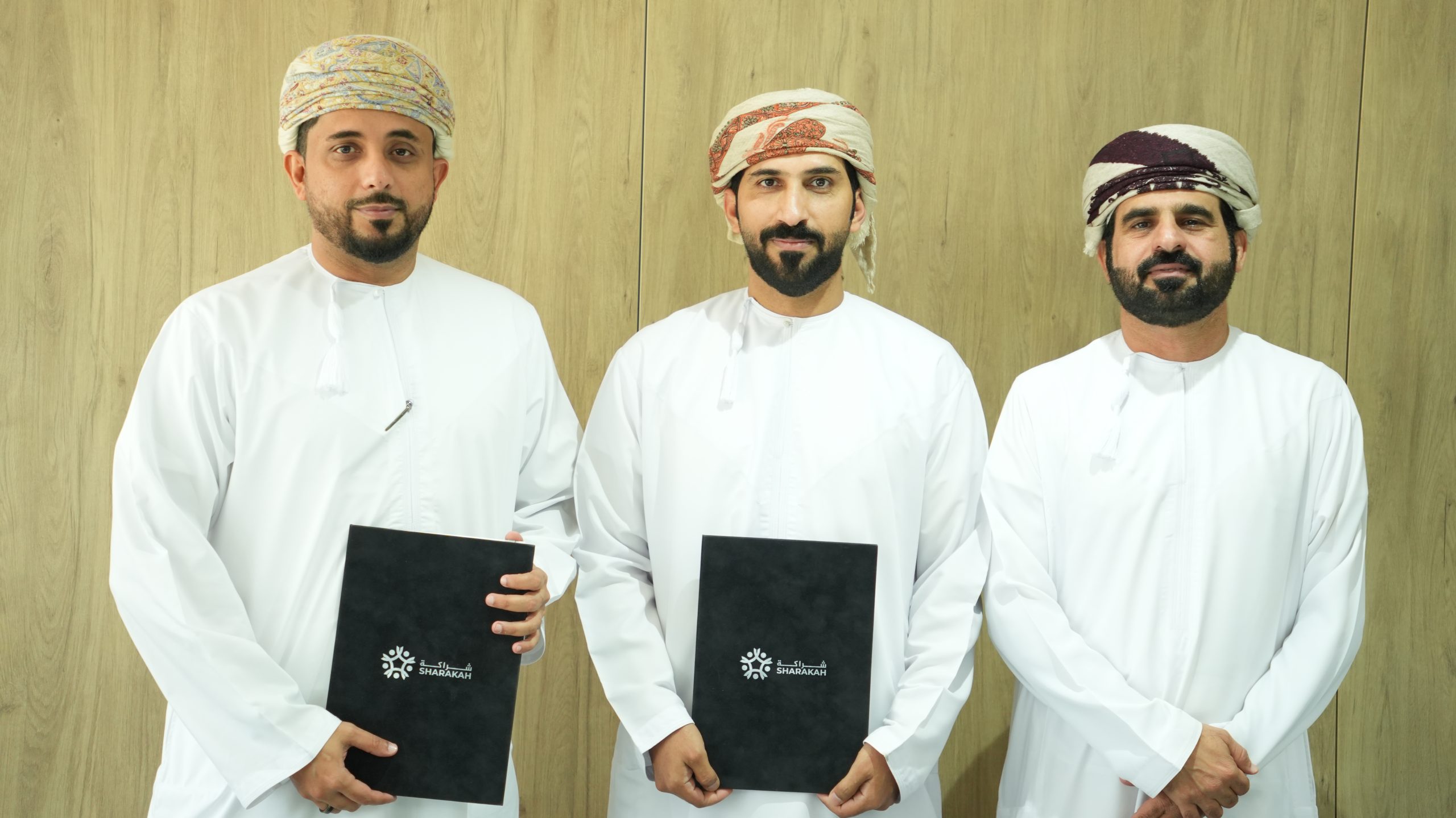
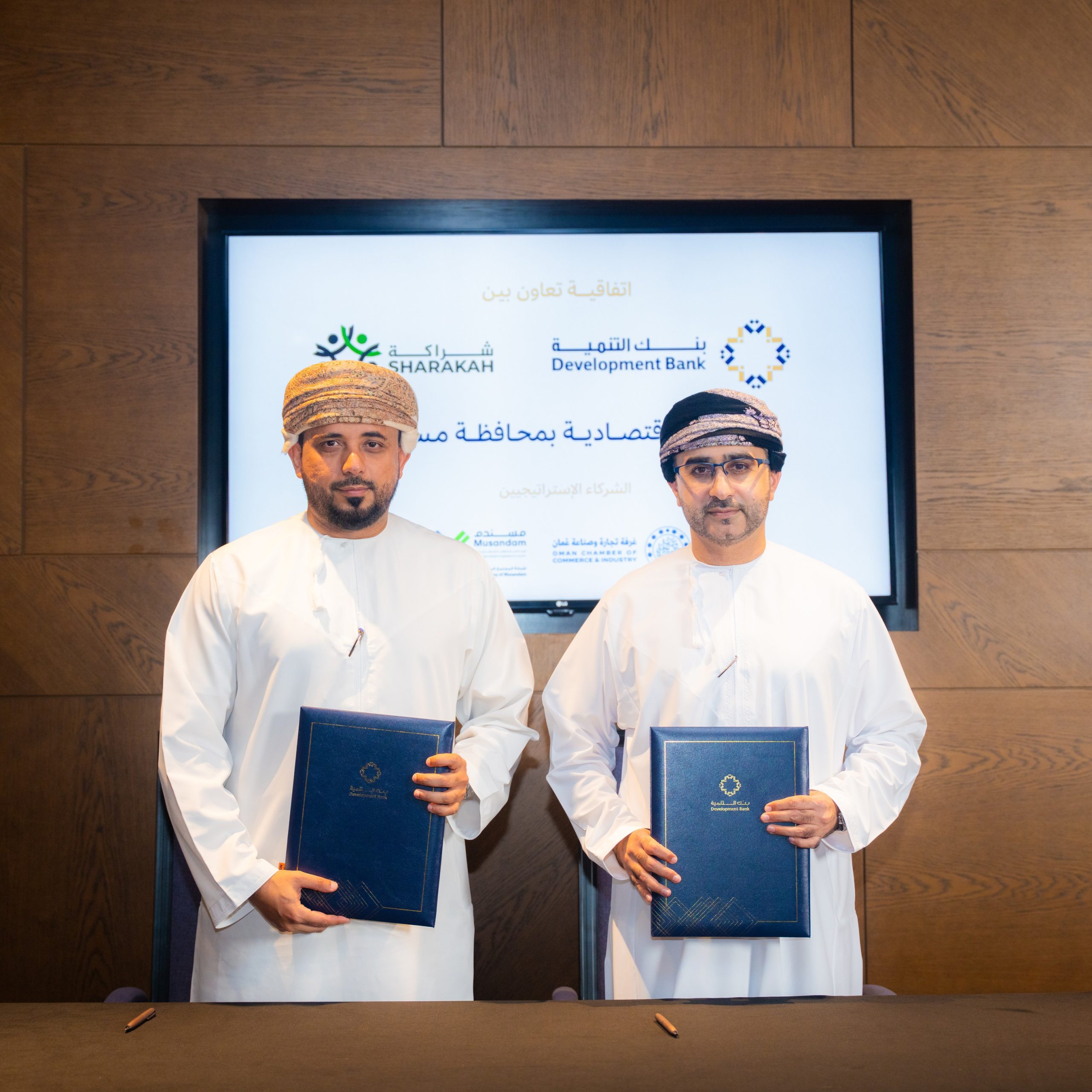
Muscat: Development Bank and Sharakah entered into an agreement at the W Hotel to take forward an Economic Gardening pilot project in Musandam. The agreement was signed by Hussain Al Lawati, CEO, Development Bank and Ali Muqaibal, CEO, Sharakah bringing a structured, data-led support offer to high-potential local businesses and strengthening the wider entrepreneurial ecosystem.
Economic Gardening is designed for growth-stage firms with momentum and ambition, typically employing 10 – 100 people. Oman’s private sector is broad-based and strongly SME-led. NCSI’s December 2025 Monthly Statistical Bulletin puts the number of active private enterprises at 282,764 in Q2 2025 with the vast majority in the micro and small categories. Those businesses are also major employers. In the same period, micro and small enterprises accounted for more than 1.2 million jobs with employment spread across all business sizes underlining the role that capable local companies play in turning commercial activity into livelihoods.
The Musandam pilot is intended to translate that scale and energy into sharper, market-facing growth. Participating businesses will be supported with advanced business analytics, market research and strategic guidance complemented by mentoring, networking and access to financial resources. A central feature will be the delivery of tailored business intelligence reports covering market trends, customer segmentation and competitive analysis supported through partnerships with data providers.
Alongside this, Development Bank and Sharakah will develop a digital platform as an online knowledge hub giving participating companies access to Economic Gardening tools, practical resources and connections to relevant partners. The platform will be designed to make specialist capability easier to reach for businesses seeking to deepen their market understanding and accelerate commercial decision-making while applying strong cybersecurity and data governance standards.
Hussain Al Lawati, CEO, Development Bank, said: “Economic Gardening is about giving Stage II companies the intelligence and capability they need to make better choices – where to compete, which customers to prioritize and how to build stronger margins. When companies at this stage grow, they create jobs, deepen local supply chains and strengthen the economy in a way that lasts. We are delighted to be working with Sharakah on this nationally important project and the pilot in Musandam is designed to be practical, measurable and replicable.”
Ali Muqaibal, CEO, Sharakah said, “This initiative marks a fundamental step in how we support the next generation of market leaders in Musandam. By integrating data driven tools with mentorship, we are ensuring that our high growth companies are fully prepared to seize new opportunities. Our collaboration with Development Bank is focused on translating commercial activity into long-term livelihoods, ensuring that our SMEs have the resources to compete effectively and contribute meaningfully to the Sultanate’s vision.”
International experience has helped build the case for Economic Gardening as a focused way to support Stage II companies. In Littleton, Colorado where the original program was developed the approach has been associated with a 71% increase in employment and a tripling of sales tax revenues a track record that encouraged adoption of similar programs across the US and Europe.
In Florida, the GrowFL initiative has been credited with creating in excess of 10,000 new jobs contributing over US$900 million to the state’s economy lifting state and local tax revenues by nearly US$82 million and delivering an estimated US$9 return for every US$1 of public investment.
The Musandam project has been designed as an eight-month program delivered in four phases beginning with planning, business selection and needs assessment moving into the deployment of business intelligence tools and the launch of the digital platform followed by workshops and mentorship programs and concluding with monitoring, evaluation and a final impact report. Delivery will also include a directory of funding opportunities and financial resources quarterly progress reporting and impact assessment with performance tracked through indicators such as the number of businesses supported, revenue growth, job creation, stakeholder engagement and return on investment.
The pilot project will be delivered in collaboration with Oman Chamber of Commerce & Industry and Musandam Global Investment Company.